
Turn trash in to treasure!
Hot Composting
Different composting ingredients have different C:N ratios C:N ratio does not have to be exact, but is good to keep in mind when building a compost pile.
Carbon/Nitrogen ratio is typically optimal at 30:1
Here is a link for C:N ratios for popular composting ingredients.
High Carbon materials are usually brown and include:
- paper
- wood
- leaves
- pine needles
- straw
- sawdust
- etc.
High Nitrogen materials are usually green and include:
- fruit and vegetable scraps
- garden waste
- coffee grounds
- grass trimmings
- etc.
A typical hot compost pile has to be at least 3 ft wide x 3 ft high x 3 ft long in order to be able to generate enough heat to be efficient.
Leaves can be composted by themselves to make “leaf mould”.
The “lasagna method” is typically preferred:
- Carbon and Nitrogen materials are layered alternately in a pile or container that measures 3 ft x 3 ft x 3 ft.
Pile should be turned as much as possible, but once a month is fine.
The compost is done when the original ingredients can not be recognized.
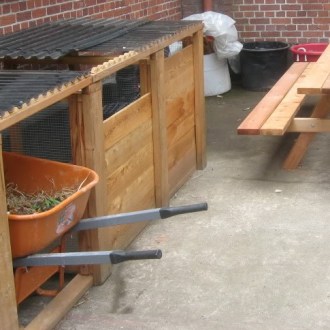
Examples of hot composting bins can be found HERE.
Vermi-composting
Definition: Using a high concentration of worms in order to process compostable material.
A great vermi-composting course, that I highly recommend is available here.
Here is a vid on how to initially set up your worm bin.
What can I do with composting worms?
- Worms can be added to conventional hot compost piles to raise efficiency.
- Worms can be added to the garden to aerate and enrich the soil perpetually.
- Worms can be fed to animals viz. chickens, fish, birds, reptiles, etc.
- Worms can be used for fishing.
Where can I get composting worms?
- Compost worms can be dug out of compost piles.
*Be careful not to collect any nightcrawlers. Nightcrawlers are not suitable for a bin environment and you will probably find more on your floor trying to escape then you will in your bin.
*Also you are not going to be guaranteed a certain species and it is a bit of trouble trying to find enough worms to fill a bin, so your best option might be…
- Buy your worms from the internet, including HERE!
What kind of bin can I use for my worms?
- Worm bins can be made from an endless variety of containers of different shapes and sizes and from homemade ones to prefabricated ones.
- The best bin for you will be determined based on individual factors like the amount of space you have available, amount of time you are able/willing to spend, what materials are available, etc.
Click HERE for descriptions of various bin types.
What can I feed my worms?
* Worms can be fed almost anything organic.
- YES: organic kitchen scraps, small amount of citrus, yard and garden waste, compost, coconut coir, peat moss, non-glossy paper, cardboard, etc.
- NO: excessive citrus, pineapple, meat, dairy products, glossy paper, etc.
My short vermicomposting guide can be found HERE.


 Grass Roots Organic Lawn Care